
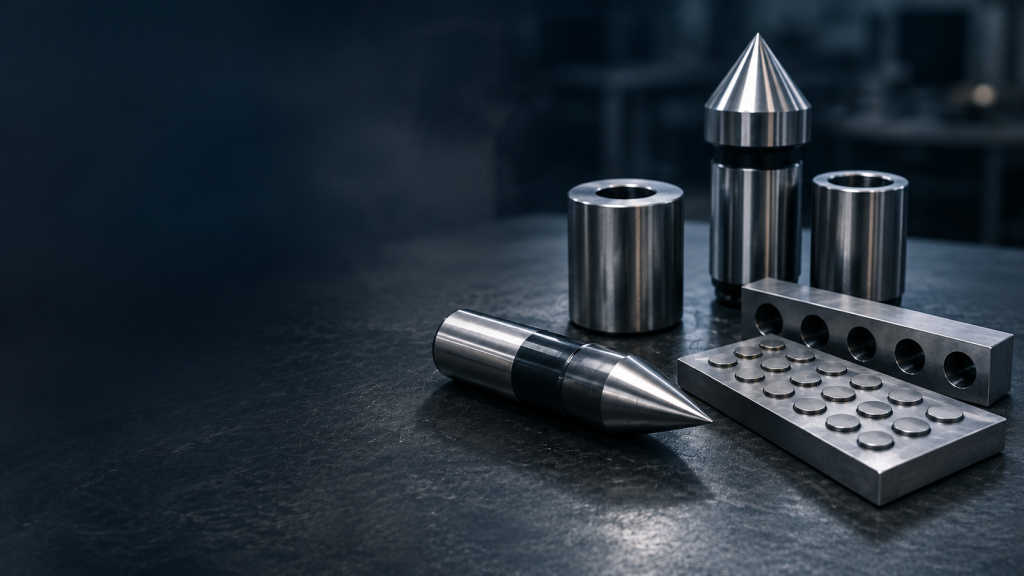
Wear resistant tooling plays a vital role in manufacturing environments where machinery, components and production equipment are exposed to friction, pressure, heat, impact or abrasive materials. For companies that rely on consistent output, reliable tooling is not just a technical requirement. It helps protect production quality, reduce downtime and keep machinery working efficiently for longer.
At Trio Tools, we specialise in the manufacture of bespoke tungsten carbide tooling, tool steel components and precision engineered wear parts made to suit demanding industrial applications. With more than 55 years of experience, our team understands the importance of producing tooling that performs accurately and repeatedly, even in challenging working conditions.
We manufacture wear resistant components to customer drawings, samples and application requirements, including carbide wear plates, carbide tipped centres, grinding quills, special tooling and precision wear parts for high wear manufacturing environments.
What Is Wear Resistant Tooling?
Wear resistant tooling refers to tools, parts and components designed to withstand repeated contact, abrasion and mechanical stress during manufacturing or machining processes. These parts are often used in machinery where standard materials would wear down too quickly, leading to inaccurate results, frequent replacement costs or unplanned production stoppages.
Examples can include wear plates, punches, dies, guides, carbide tipped centres, grinding quills, precision components and special tooling made for a specific production process. The exact design depends on the application, the material being processed, the operating environment and the level of accuracy required.
In many industries, even a small amount of tool wear can affect the finished product. A worn edge, damaged contact point or distorted surface can lead to poor tolerances, inconsistent finishes and unnecessary waste. This is why choosing the right wear resistant tooling is so important.
Why Tungsten Carbide Is Used for Wear Resistant Tooling
Tungsten carbide is one of the most widely used materials for high performance wear resistant tooling because of its hardness, strength and ability to maintain shape under demanding conditions. It is especially useful where tooling is exposed to abrasive materials, repeated pressure or long production runs.
Compared with many conventional steels, tungsten carbide offers excellent resistance to wear. This means components can retain their working profile for longer, helping to improve consistency and reduce the need for regular replacement. For manufacturers, that can mean fewer interruptions, better accuracy and lower long term tooling costs.
Carbide is often selected for parts such as wear plates, tipped centres, cutting tools, forming tools and precision components where durability and dimensional stability are critical. In some cases, tungsten carbide may be used as a solid component. In others, it may be applied as a tip or wear surface, combining the strength of tool steel with the wear resistance of carbide.
Tungsten Carbide vs Tool Steel for Wear Resistant Components
Tungsten carbide and tool steel are both used for wear resistant components, but they are suited to different applications. The right choice depends on the type of wear involved, the load, the working environment, the required tolerance and the cost of replacement.
| Feature | Tool Steel | Tungsten Carbide |
|---|---|---|
| Wear Resistance | Good | Excellent |
| Hardness | High | Very High |
| Abrasion Resistance | Moderate to Good | Excellent |
| Impact Resistance | Often Better for Shock Loading | Depends on Grade and Design |
| Typical Use | General Tooling, Dies, Punches and Machine Parts | High Wear Areas, Wear Plates, Tips, Centres and Precision Wear Parts |
| Cost | Usually Lower | Usually Higher, but Longer Lasting in the Right Application |
In many applications, the best solution is not simply the hardest material. A carbide tipped component may provide the correct balance between strength, durability and cost, while a solid tungsten carbide part may be better where abrasion resistance and dimensional stability are the main priorities.
The Cost of Poor Tool Wear
Tool wear is not always obvious at first. A machine may still be running, parts may still be coming off the line, and the process may appear normal. The problem is that worn tooling often creates hidden costs before it completely fails.
As tooling wears, tolerances can drift. This can lead to rejected parts, extra inspection time, rework and wasted materials. Production teams may also need to stop machines more often to check, adjust or replace components. Over time, these small interruptions can become expensive.
In high volume production, poor wear resistance can also affect consistency across batches. One part may be within tolerance, while another may fall outside the required specification. That creates quality control issues and can damage confidence in the production process.
Well designed wear resistant tooling helps reduce these risks by holding its form for longer and delivering more stable performance throughout its service life.
Signs Your Wear Resistant Tooling Needs Replacement
Tooling does not always fail suddenly. In many cases, wear develops gradually and starts to affect production before the component becomes unusable. Recognising the signs early can help prevent downtime, poor quality and damage to other parts of the machine.
- Finished parts are no longer holding tolerance
- Surface finish quality has started to decline
- There is increased vibration during operation
- Machines require more frequent adjustment
- Wear marks, scoring or deformation are visible
- Production stoppages are becoming more frequent
- Tooling is heating up more than expected
- Replacement parts are being needed too often
If these issues keep recurring, a bespoke tungsten carbide or tool steel solution may improve tool life and provide more reliable production performance.
Common Applications for Wear Resistant Tooling
Wear resistant tooling is used across a wide range of manufacturing and engineering sectors. Any process involving repeated movement, pressure, cutting, grinding, forming or abrasive materials can benefit from improved tool life and stronger component performance.
- Carbide wear plates for machinery exposed to abrasive materials
- Carbide tipped centres for precision turning and grinding operations
- Internal grinding quills for accurate machining work
- Special punches and dies for production machinery
- Tool steel and tungsten carbide parts manufactured to drawing
- Wear parts for roof tile manufacturing equipment
- Precision components for specialist engineering applications
- Custom carbide tooling for high wear applications
Every application has its own requirements. Some parts need excellent impact resistance. Others need a highly accurate finish or a specific surface profile. Some need to withstand heat, while others must resist abrasion from materials passing through a production process. This is why bespoke tooling is often the best solution.
Bespoke Wear Resistant Tooling Made to Drawing
One of the main advantages of working with a specialist manufacturer is the ability to produce tooling to suit the exact requirements of your machinery and production process. Off the shelf components are not always suitable, especially where tolerances are tight or where existing equipment has specific dimensions.
Trio Tools manufactures bespoke tungsten carbide and tool steel components to customers’ drawings. This allows the tooling to be made for the exact application, rather than forcing a production process to work around a standard part.
Custom tooling can help improve performance in several ways. It can provide a better fit, improve alignment, reduce vibration, protect machinery and extend component life. It can also help solve recurring wear issues where standard parts repeatedly fail or need replacing too often.
Tungsten Carbide Wear Plates for Machinery Protection
Wear plates are an important part of many production environments. They are used to protect machinery from abrasion, impact and repeated material contact. Without the correct wear protection, expensive equipment can suffer damage over time, leading to maintenance issues and avoidable downtime.
Trio Tools manufactures solid tungsten carbide, tungsten carbide tipped and tool steel wear plates for industrial applications. These can be used in machinery where abrasive materials pass through, press against or move across a surface during operation.
The right wear plate can act as a protective barrier between the working process and the machine itself. This helps preserve the condition of the equipment and keeps the production line operating more reliably.
Carbide Tipped Centres and Precision Support
Carbide tipped centres are another example of wear resistant tooling used in precision machining. They are commonly used to support workpieces during turning, grinding and similar operations where stability and accuracy matter.
The carbide tip provides a hard, durable contact point that can resist wear better than many standard materials. This is useful in repeat production work, where the centre needs to maintain accuracy over long periods. If the contact point wears or distorts, it can affect runout, alignment and surface finish.
By using a carbide tipped centre, manufacturers can improve tool life and help maintain consistent support throughout the machining process.
Wear Resistant Tooling for Aerospace Manufacturing
Aerospace manufacturing often demands tight tolerances, repeatable accuracy and reliable component performance. Wear resistant tooling can support these requirements by helping tools maintain their working profile over longer production runs.
Tungsten carbide and precision tool steel components may be used in applications where stability, durability and surface finish are critical. For specialist aerospace suppliers, bespoke wear resistant components can help reduce the risk of tolerance drift and unnecessary production interruptions.
Wear Resistant Tooling for Automotive Manufacturing
Automotive production environments often involve repeat processes, high volumes and strict quality control requirements. Tooling that wears too quickly can create avoidable downtime, inconsistent parts and increased inspection work.
Custom carbide tooling, wear plates, centres and precision wear components can help support reliable automotive component manufacture by improving durability in areas exposed to repeated pressure, movement or abrasion.
Wear Resistant Tooling for Ceramic and Roof Tile Production
Ceramic and roof tile manufacturing can be particularly demanding on tooling because of the abrasive nature of the materials being processed. Wear parts used in these environments need to withstand repeated contact, pressure and material movement.
Trio Tools manufactures wear resistant components for roof tile manufacturing equipment, including tungsten carbide and tool steel parts designed to protect machinery, improve service life and support consistent production.
Wear Resistant Tooling for Precision Engineering
Precision engineering companies depend on tooling that can hold accuracy over time. Even small changes in tool condition can affect tolerances, finish quality and repeatability.
Wear resistant tooling, including carbide tipped centres, grinding quills and custom precision components, can help maintain stability in machining, grinding, forming and specialist production work.
Choosing the Right Material for the Job
Not every wear problem needs the same solution. In some cases, solid tungsten carbide may be the best choice. In others, a carbide tipped tool or hardened tool steel component may offer the right balance of strength, durability and cost.
The correct material depends on several factors, including the operating load, the material being processed, the type of wear involved, the required tolerance and the working environment. Abrasive wear, impact wear, heat and pressure can all affect material choice.
This is where technical experience matters. A specialist tooling manufacturer can review the application and recommend a practical solution based on how the part will be used, rather than simply selecting the hardest material available.
Tool Reconditioning and Extending Tool Life
In some cases, worn tooling does not need to be completely replaced. Tool reconditioning can help restore performance and extend the useful life of existing components. This can be a cost effective option where the main body of the tool remains suitable but the working surface, profile or contact area needs attention.
Reconditioning can help reduce waste, lower replacement costs and keep production equipment operating efficiently. For companies running specialist or bespoke tooling, this can be especially valuable because replacement parts may not always be available quickly from standard suppliers.
Why Work With Trio Tools?
Trio Tools is a family run company with more than 55 years of experience in tungsten carbide tooling and precision parts. Based in Brentwood, Essex, we manufacture high quality tooling and components for customers who need accuracy, durability and reliable performance.
Our work includes bespoke tungsten carbide components, tool steel parts, carbide wear plates, grinding quills, carbide tipped centres and special tooling manufactured to customer drawings. We understand that every production process is different, which is why we focus on practical, tailored solutions rather than one size fits all tooling.
- More than 55 years of tooling experience
- Specialists in tungsten carbide tooling and precision components
- Manufacture to customer drawings and samples
- Bespoke tool steel and carbide wear parts
- Tool reconditioning and replacement support
- UK-based manufacturer in Brentwood, Essex
For manufacturers, the right wear resistant tooling can make a measurable difference. It can reduce downtime, improve consistency, protect machinery and support better long term production efficiency.
Wear Resistant Tooling FAQs
What is wear resistant tooling?
Wear resistant tooling is tooling designed to withstand abrasion, pressure, impact, friction or repeated contact during manufacturing. It is used where standard materials would wear too quickly or fail to hold the required tolerance.
Why is tungsten carbide used for wear resistant tooling?
Tungsten carbide is used because it offers excellent hardness, wear resistance and dimensional stability. It is suitable for high wear applications where tooling is exposed to abrasion, pressure or repeated production cycles.
What are tungsten carbide wear components?
Tungsten carbide wear components are parts manufactured from solid carbide or carbide tipped materials to resist wear in demanding industrial environments. Examples include wear plates, centres, tips, guides and precision wear parts.
Can Trio Tools manufacture wear resistant tooling to drawing?
Yes. Trio Tools manufactures bespoke wear resistant tooling, tungsten carbide components and tool steel parts to customer drawings, samples and specific application requirements.
What industries use wear resistant tooling?
Wear resistant tooling is used in precision engineering, aerospace, automotive manufacturing, ceramic production, roof tile manufacturing and general industrial production environments.
What causes tooling wear?
Tooling wear can be caused by abrasion, friction, pressure, heat, impact, vibration, poor alignment or repeated contact with hard or abrasive materials during production.
How do I know when wear parts need replacing?
Common signs include poor surface finish, reduced accuracy, visible wear, increased vibration, tolerance issues, more frequent machine adjustments and rising levels of rejected parts.
Is tungsten carbide better than tool steel?
Tungsten carbide usually offers better wear and abrasion resistance than tool steel, but tool steel may be more suitable for certain impact or cost-sensitive applications. The best material depends on the working conditions and component design.
Can worn tooling be reconditioned?
In some cases, yes. If the main body of the tool remains suitable, reconditioning may restore the working surface, profile or contact area and extend the useful life of the component.
Do you manufacture one-off wear parts?
Yes. Trio Tools can support one-off specialist components as well as repeat production tooling, depending on the application and customer requirements.
Speak to Trio Tools About Wear Resistant Tooling
If you need wear resistant tooling for a specific application, Trio Tools can help design, manufacture or recondition components to suit your requirements. Whether you need tungsten carbide wear plates, carbide tipped parts, tool steel components or bespoke precision tooling made to drawing, our experienced team can support your project from initial enquiry through to finished component.