
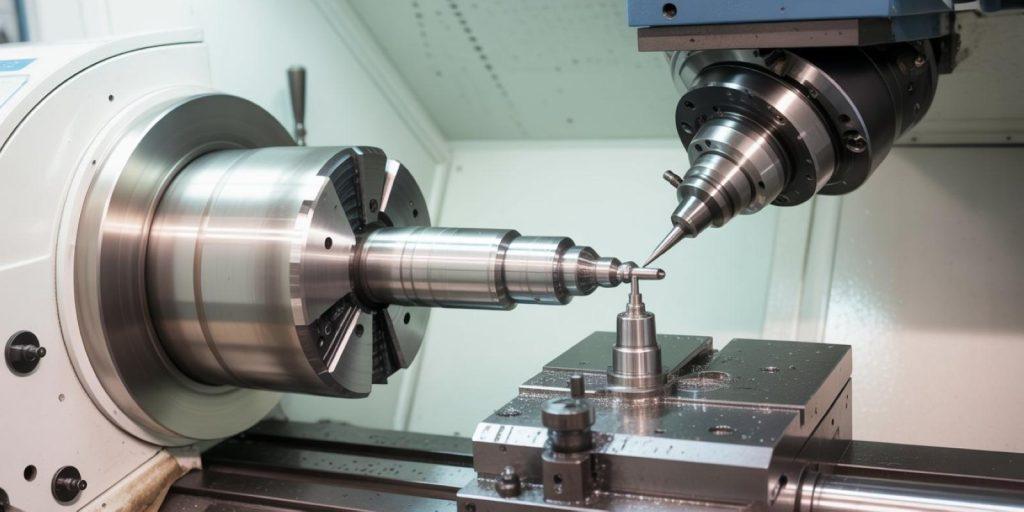
Lathe centre tooling is a key part of any turning operation where accuracy and consistency matter. Whether you are working on manual lathes or CNC machines, the centre supports the workpiece and ensures it rotates true, helping maintain tight tolerances throughout the process.
At Trio Tools, we supply high-quality lathe centre tooling designed for precision engineering environments where reliability and repeatability are essential.
What Is Lathe Centre Tooling
Lathe centres are used to support a workpiece at the tailstock end while it rotates in the spindle. This setup is commonly used when machining between centres, particularly for longer components or parts that require accurate alignment.
By holding the workpiece on its true axis, lathe centre tooling helps reduce movement, control runout, and maintain dimensional accuracy across the full length of the component.
Why Lathe Centre Tooling Is Important
The centre point may be small, but its impact on the machining process is significant. Poor-quality or worn centres can quickly lead to inaccuracies, especially over longer production runs.
Using the right lathe centre tooling helps to maintain concentricity during turning, reduce runout and vibration, improve consistency across batches, minimise scrap and rework, and support stable machining conditions.
For precision engineering applications, the centre should be treated as a critical part of the setup, not an afterthought.
Live Centres and Dead Centres
There are two main types of lathe centre tooling, each suited to different applications.
Live centres rotate with the workpiece and use internal bearings. They are typically used for higher-speed operations where reducing friction and heat is important.
Dead centres remain stationary and are used in the tailstock. They are often chosen for heavy-duty or lower-speed applications where maximum rigidity is required.
Selecting the correct type depends on the material, speed, load, and level of precision needed.
Carbide-Tipped Centres for Improved Performance
For applications where accuracy needs to be maintained over time, carbide-tipped centres offer a clear advantage. The carbide tip provides a harder, more wear-resistant contact point compared to standard steel centres.
This helps maintain the shape of the centre, even under load, reducing the risk of misalignment and dimensional variation.
You can view our range of carbide-tipped centres to find a suitable option for your application.
Applications for Lathe Centre Tooling
Lathe centre tooling is widely used across engineering and manufacturing sectors, including CNC turning and precision machining, subcontract engineering, shaft and bar work, grinding and finishing operations, and high-tolerance component production.
In each case, the quality of the centre directly affects the accuracy and consistency of the finished part.
Why Choose Trio Tools
Trio Tools specialises in precision tooling for demanding applications. Our lathe centre tooling is designed to deliver consistent performance, even in high-load or long production environments.
We understand the importance of accuracy in machining and supply tooling that supports reliable, repeatable results.
Get in Touch
If you are reviewing your current setup or experiencing issues with accuracy or consistency, we can help.
Contact Trio Tools to discuss your requirements and find the right lathe centre tooling for your application.
Frequently Asked Questions
What is lathe centre tooling used for?
Lathe centre tooling is used to support a workpiece at the tailstock end while it rotates in the spindle. It helps keep the component aligned on its true axis, which is essential for maintaining accuracy, especially when machining long or slender parts.
What is the difference between a live centre and a dead centre?
A live centre rotates with the workpiece and uses internal bearings, making it suitable for higher-speed applications. A dead centre remains stationary and is typically used for heavier-duty or lower-speed machining where maximum rigidity is required.
How do I know if my lathe centre needs replacing?
Signs include visible wear on the tip, increased vibration, difficulty holding tolerance, or inconsistent results across production runs. Even small wear can affect accuracy over time.
Why are carbide-tipped centres better than standard centres?
Carbide-tipped centres are more wear-resistant than steel, helping them maintain their shape and accuracy for longer, particularly in high-load or long production runs.
Can worn centres affect machining accuracy?
Yes, worn centres can lead to misalignment, runout, and dimensional variation, which can result in parts falling outside tolerance and increased rework.
When should I use lathe centre tooling instead of a chuck?
Lathe centre tooling is typically used for longer components or when higher levels of accuracy and alignment are required, helping reduce deflection during turning.
What industries use lathe centre tooling?
Lathe centre tooling is used across precision engineering, automotive manufacturing, aerospace, and general machining where accurate and consistent turning is required.